
Massive IoT Satellite Connectivity
Unlock new satellite IoT applications with 3GPP standards-based NTN NB-IoT service. Designed for 100s – 1,000s of endpoints.
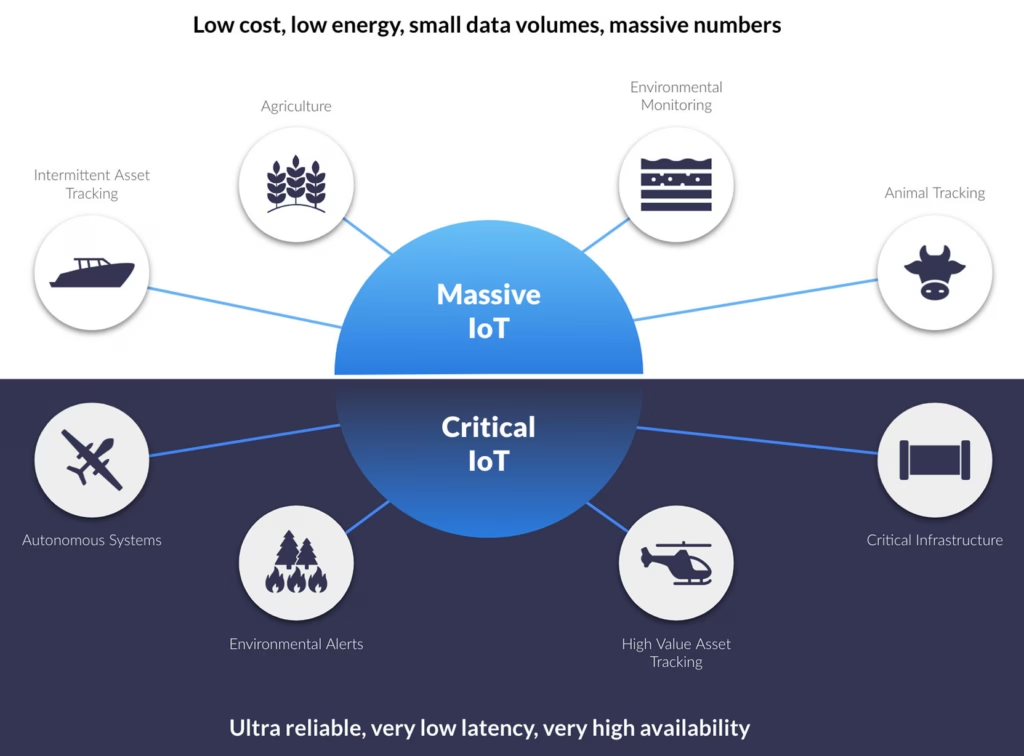
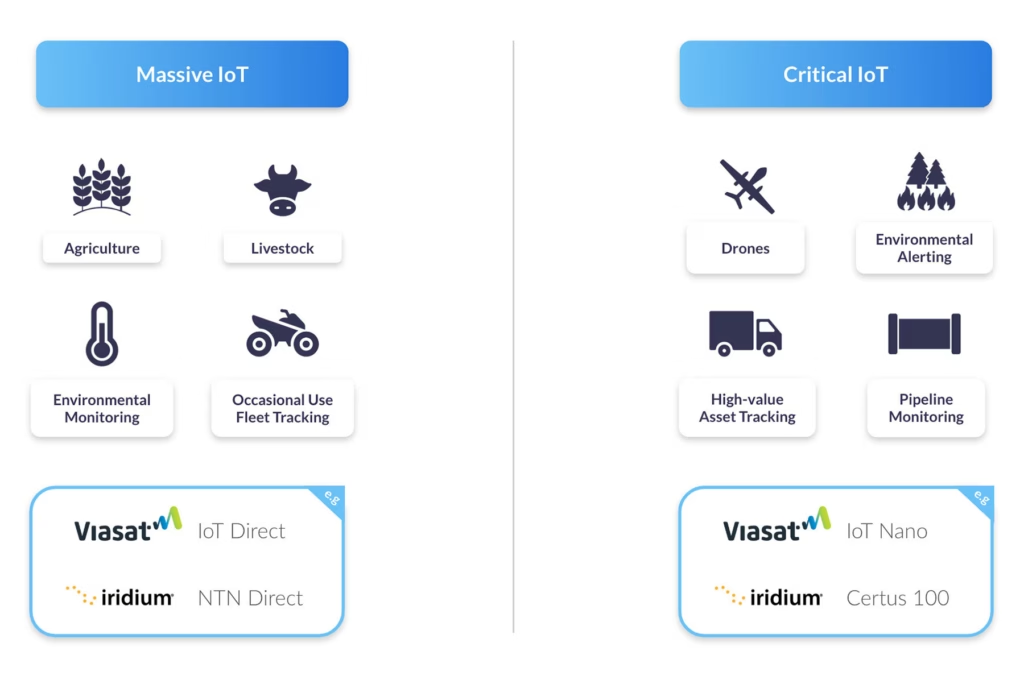
Massive IoT vs. Critical IoT
The introduction of NTN NB-IoT services has opened up a new class of satellite IoT: low cost, low energy use, and very small data volumes.
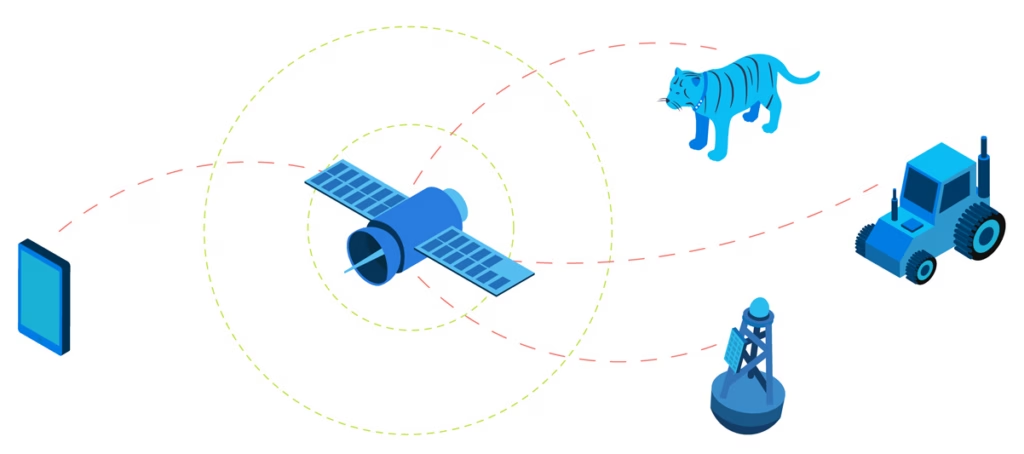
NTN NB-IoT lends itself to applications with hundreds of endpoints, where there isn’t a need for real-time data.
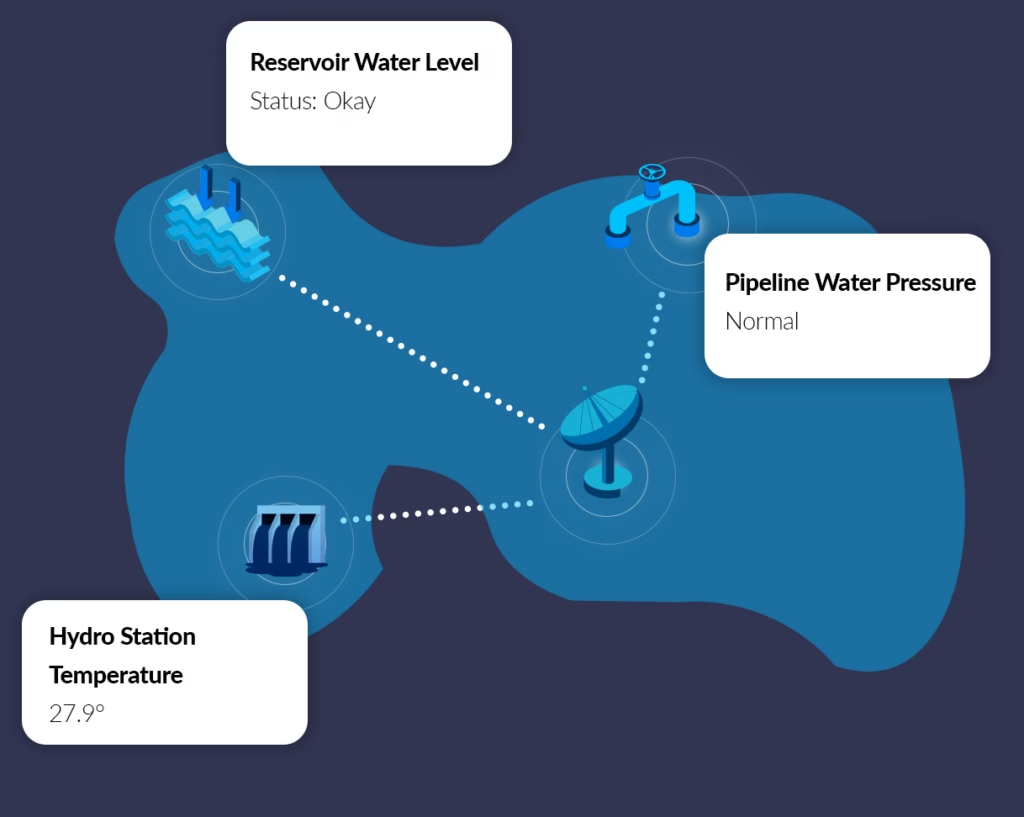
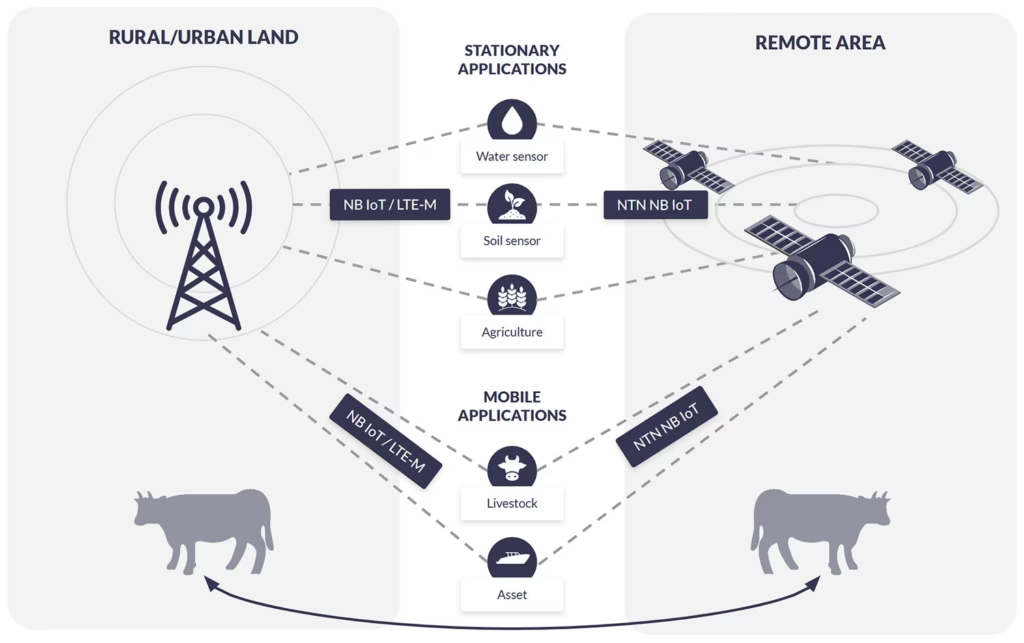
For example: fleet management and goods tracking; smart grid management; precision agriculture and livestock monitoring; inventory management; lower-value asset tracking and predictive maintenance; air and water quality monitoring.
You can anticipate receiving your data a few times a day, and the service is intended for very simple sensor readings; it becomes cost-prohibitive if you want to send aggregated gateway data.
Key Benefits of Ground Control’s NTN NB-IoT Services

20+ Years Satellite IoT Expertise
We’ve been delivering reliable satellite IoT connectivity since 2003, so you’ll get a solution that fits your specific needs from day one.

Direct-to-Cloud Sensor Delivery
Transmit your sensor data over satellite straight into your chosen cloud platform using Cloudloop Data. Fully tested and ready for 3GPP-compliant NTN NB-IoT.

Reduced Hardware Costs with Hybrid Modules
Use a single 3GPP Rel-17-compliant cellular + satellite radio module for both terrestrial and NTN NB-IoT links, cutting component and integration spend.
Flexible, Competitive Tariffs
Our partnerships with Viasat (NB-NTN) and Iridium (NTN Direct) deliver a range of low-power NTN NB-IoT plans, so you get the best coverage and pricing mix.

Fleet & Goods Tracking
Scheduled NB‑IoT bursts deliver your vehicle and cargo locations on a predictable cadence, enabling efficient route planning and reduced idle mileage without constant power drain.

Smart Grid Management
Smart meters and grid sensors can report meter reads and status updates over NB‑IoT, cutting manual reads and operational overhead while ensuring timely billing and fault alerts.

Agriculture & Livestock Monitoring
Soil, moisture, and animal health sensors send intermittent data bursts, automating irrigation schedules and welfare checks without requiring constant connectivity.

Environmental Monitoring
Air and water quality sensors relay pollution and compliance data several times per day, supporting timely alerts and ecosystem protection with multi‑year battery life.

Predictive Maintenance
Equipment health sensors dispatch intermittent telemetry to feed analytics engines, forecasting failures and enabling planned servicing that cuts unplanned downtime by up to 50%.

Asset Tracking
NB‑IoT-enabled trackers deliver location and condition updates several times a day, giving you visibility of lower-value assets worldwide, and without needing frequent battery changes.
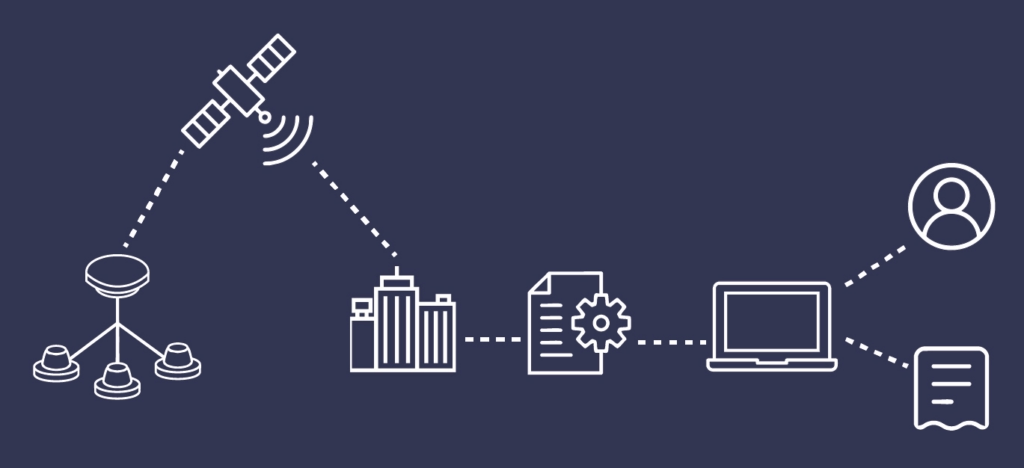
NTN NB-IoT Service Architecture
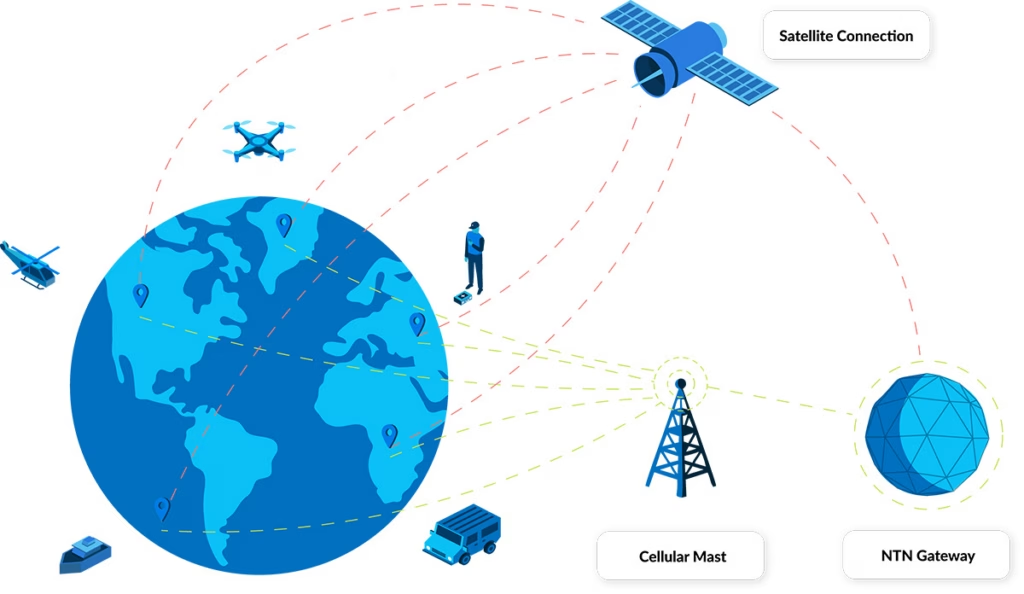
From prototype to scale, Ground Control delivers full-stack satellite IoT – starting with the transceiver and extending to data delivery. For NTN, sensors typically connect to an external device with both antenna and modem, as a clear view of the sky is essential (see antenna guidance).
Data is sent via Viasat NB-NTN (Q1 2027) or Iridium NTN Direct (2026-7), then routed through Ground Control infrastructure for flexible, secure delivery. Whether you use our APIs or Cloudloop, you get simple provisioning, billing, and analytics, all backed by deep integration with satellite networks.
Find the Right Coverage for Your Application
NTN LTE Cat 1
LTE Cat 1 is ideal for fast-moving applications with a decent power source, e.g. trucks, trains and larger drones. It offers fast data speeds and low latency. It is relatively power-hungry, and it’s not globally available (learn why).
Early services are anticipated in 2027.
NTN NB-IoT
NB-IoT works well in stationary, low power applications, such as environmental monitoring. It transmits small volumes of data a few times a day, which lightens the load on power draw. Designed for 100s of endpoints.
E.g. Iridium NTN Direct and Viasat NB-NTN
Proprietary IP-Based
IP-based satellite communication delivers close to real-time connectivity coupled with the highest data rates, making this ideal for remote control of UAVs, USVs etc. It can be power-hungry and expensive, without careful use.
E.g. Iridium Certus 100 and Viasat IoT Pro
Proprietary Message-Based
Message-based transmissions are power-efficient and cost-effective. These proprietary services are globally available and very low latency, ideal for mission-critical alerts, asset tracking, and infrastructure monitoring.
FAQs About Standards-Based Satellite IoT
It depends on the chipset. The satellite specification came into the cellular standards in 2022, but it takes some time for this to shake through to the chipset manufacturers.
If your chipset predates the 3GPP’s NTN extensions in Release 17, it won’t work for satellite connectivity.
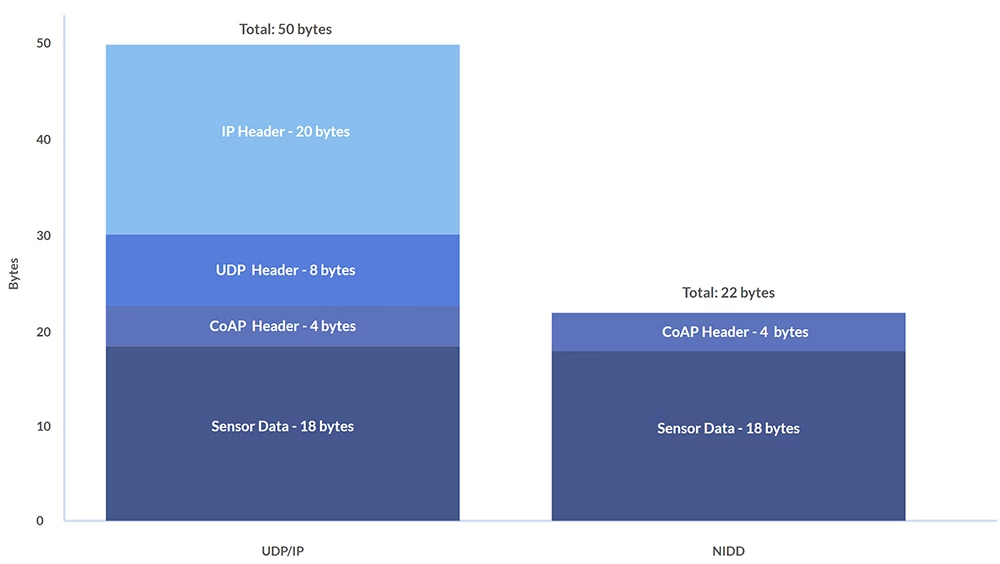
If/when it comes to migrating an existing LTE-M / NB-IoT device, it’s important to note that NTN NB‑IoT does not support TCP/IP; instead, it relies on UDP/IP or Non‑IP Data Delivery (NIDD), both of which have much lower overhead and suit the small‑packet, delay‑tolerant nature of satellite links. If your existing device uses TCP, you’ll need to refactor your firmware to bundle data into UDP or NIDD messages, manage acknowledgments at the application layer, and optimize for intermittent connectivity and longer round‑trip times.
As with any technology, particularly when it’s new, there are a few considerations to take into account when determining if this will work for your massive IoT application. This isn’t an exhaustive list, but gives you a starting point for discovery.
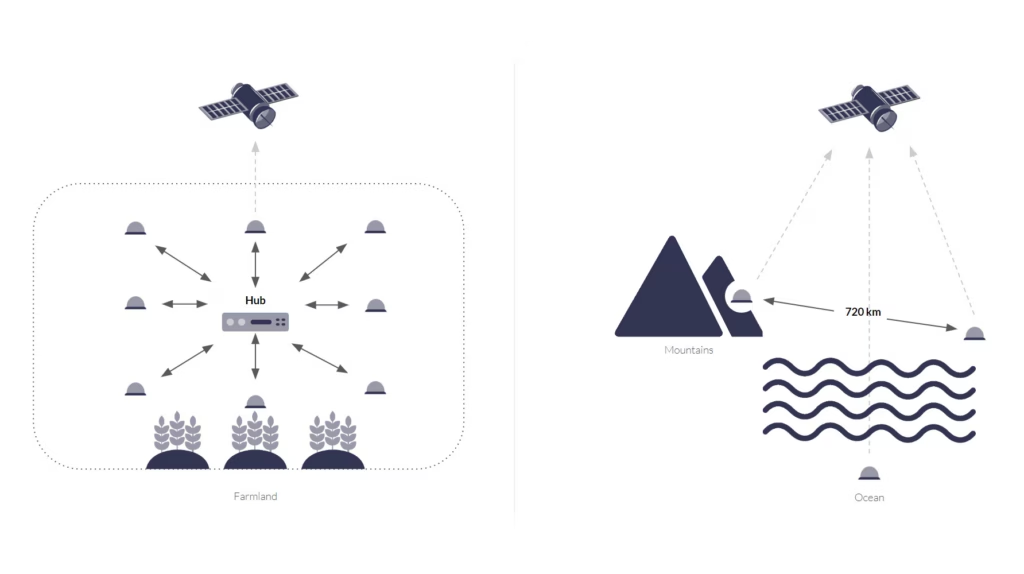
- Antenna and form factor: Cellular IoT devices don’t need a clear view of the sky, but in order to access NTN services, you absolutely do. Further, if your connectivity partner is Viasat (and just now, they have the most advanced proposition), you will also need to consider the look angle, because the satellite is in a fixed position overhead (called “geostationary” orbit), and your antenna needs to have clear line of sight to the satellite. This means that sometimes you will need a separate piece of hardware – one which combines the chipset and antenna in a form factor suitable for permanent outdoor installation – in order to achieve that.
- Coverage: Viasat’s live beams today cover North America, Australia, New Zealand, Brazil and parts of Europe, but global rollout is gradual. It’s important to check the service availability, and capability, in your specific region.
- Cost and session sizing: Beyond about 50 KB per month, standard NTN tariffs can become costly. This isn’t the technology for you if you need to transmit gateway data or complex, multi-sensor readings. Equally, the minimum session size at the moment is 50 bytes, which for some applications is far more than is needed, and there may be more cost-effective proprietary solutions. Talk to us to get impartial, expert advice on this topic.
- Network congestion: At the moment, these services are new, and there’s very little network traffic. However, once more devices come online, there’s a shared network congestion risk when traffic is heavy, which can impact throughput and connection reliability.
- Firmware and data mode: NTN profiles mandate reduced data rates and larger minimum packet sizes. Your application firmware must bundle and buffer messages accordingly, and handle longer latency.
- Transport protocol adaptation: NTN NB‑IoT does not support TCP/IP; instead, it relies on UDP/IP or Non‑IP Data Delivery (NIDD), both of which have much lower overhead and suit the small‑packet, delay‑tolerant nature of satellite links. If you’re migrating an existing LTE‑M/NB‑IoT device (which often uses TCP), you’ll need to refactor your firmware to bundle data into UDP or NIDD messages, manage acknowledgments at the application layer, and optimize for intermittent connectivity and long round‑trip times.
No, you shouldn’t expect the same speed and responsiveness as terrestrial NB‑IoT.
Under Skylo’s current NTN NB‑IoT implementation, the link is constrained to roughly 1-2 Kbps peak throughput in both uplink and downlink, versus the tens or hundreds of Kbps you’d see over terrestrial NB‑IoT. This is deliberately optimized for frequent, small‑packet exchanges. It also limits maximum transport block sizes to around 256 bytes (compared to ~1.5 kB on land), so your firmware must buffer data into these smaller chunks to maximize efficiency.
Round‑trip latencies jump into the tens of seconds, or even minutes if your MVNO batches frames, whereas terrestrial NB‑IoT typically sees 1–10 s delays.
On top of that, NTN links share satellite spot‑beam capacity with other users (so you can hit congestion during peak loads), carry steep per‑kB costs once you exceed ~50 kB/month, and require firmware tweaks for larger minimum packet sizes and longer sleep‑wake cycles. All of these factors mean that NTN NB‑IoT is best suited for very infrequent, small payload telemetry rather than anything resembling cellular performance.


Ready to Get Started?
We’ve led the way in satellite tracking solutions since 2003, and design and build our hardware, firmware and software in-house. To organize a demo, or simply have your questions answered, please complete the form and we’ll respond with objective, expert advice within one working day.
If you prefer to speak to someone directly, call us on +44 (0) 1452 751940 (Europe, Asia, Africa) or +1.805.783.4600 (North and South America), or email hello@groundcontrol.com.